Vision Therapy For Meniere’s Disease
The body’s vestibular system consists of tiny structures within the inner ear that are responsible for maintaining balance and stability. This system works closely with the visual system and other receptors in the body to keep a person feeling orientated and balanced. When there is a problem in either the vestibular system or visual system, balance issues can occur.
It can be difficult to pinpoint the root cause of symptoms, so if a person has been diagnosed with a vestibular balance disorder — like Meniere’s disease — it’s important to have their vision evaluated to rule out visual dysfunction as a possible secondary cause or contributer. Moreover, ensuring healthy visual functioning can minimize dizzy spells and other symptoms.
What is Meniere’s Disease?
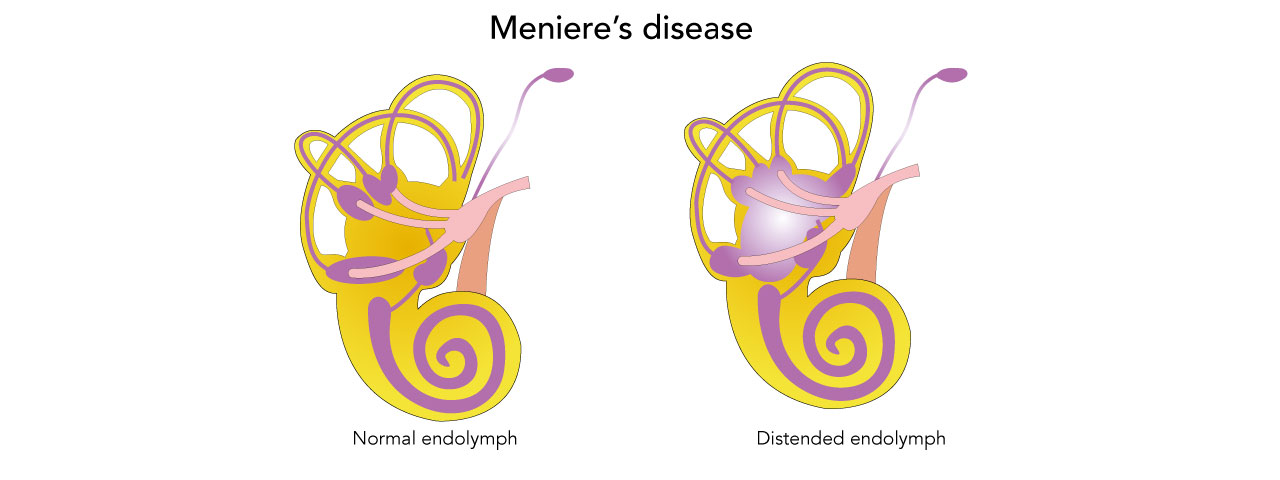
Meniere’s disease is an inner ear disorder that can cause severe dizziness (vertigo), congestion in the ears, ringing in the ears (tinnitus) and hearing loss.
A person can be diagnosed with Meniere’s disease at any age, but is often first diagnosed in adults between the ages of 40-60. It is considered a chronic condition and affects 650,000 North Americans each year.
There are no definitive answers explaining why a person would develop Meniere’s disease, but it is believed that a viral infection, genetics, autoimmune reactions and improper drainage of ear fluid may play a role.
How Vision Relates to Meniere’s Disease
The vestibular system works very closely with the visual system to maintain steadiness. In fact, 70% of the sensory information that the brain receives is visual. Your eyes are largely responsible for telling your brain where you are in space in relation to other objects.
Your brain must receive compatible information from all sensory receptors in order to feel secure and balanced. When visual information doesn’t line up with sensory information from other sources — like from the ears — dizziness, fogginess, nausea and fatigue can occur.
For patients with visual dysfunction, developing and strengthening visual skills and improving the functioning of the visual system can greatly reduce feelings of dizziness and imbalance.
How a Vision Therapist Can Help
Anyone suffering from dizzy spells should have a functional visual assessment to measure all areas of visual functioning, especially depth and space perception. Even slight visual dysfunction, such as reduced visual skills or visual processing, can cause or exacerbate dizziness and other symptoms.
It’s important to note that this type of visual assessment goes beyond that of a standard eye exam. Patients with 20/20 vision can still have problems with visual skills or processing that go undetected and undiagnosed for years.
If visual dysfunction is found, your eye doctor may prescribe a personalized program of vision therapy. This form of therapy involves the use of specialized eye exercises, prisms and therapeutic lenses that recalibrate how the brain and eyes work together.
Vision therapy also involves a tailor-made regimen of visual exercises that are performed in-office, as well as between office sessions, as an at-home component to treatment.
If you or a loved one has been diagnosed with a balance disorder like Meniere’s disease, or has gone through vestibular rehabilitation with no improvement, speak with Dr. Priya Maharaj about the benefits of vision therapy.
Our practice serves patients from Hamilton area, Burlington, Brantford, and Cambridge, Ontario and surrounding communities.REFERENCES
- https://www.ovpjournal.org/uploads/2/3/8/9/23898265/ovp3-5_article_esposito_web.pdf
- https://www.aaopt.org/docs/knowledge-base/helenatzou.pdf?sfvrsn=2620ca28_0
- https://vestibular.org/sites/default/files/page_files/Vision%20Challenges_0.pdf
- https://www.neurovisualperformance.ca/neuro-optometric-rehabilitation/vestibular-dysfunction/