Patching or Vision Therapy for Lazy Eye?
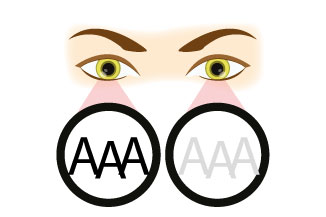
Amblyopia, commonly referred to as ‘lazy eye’, occurs when the brain and the eye are not working in perfect unison. This results in decreased vision in one eye that otherwise seems healthy.
While patching was traditionally the default treatment for amblyopia, vision therapy has now been clinically proven to provide optimum results and for several reasons. The exercises performed throughout the vision therapy program are meant to teach the patient new visual skills in an engaging and motivating way until the learned skill becomes automatic. Vision therapy is an active program, that has been shown to outweigh the benefits of just passively patching the one eye.
How Does Vision Therapy Compare To Eye Patching?
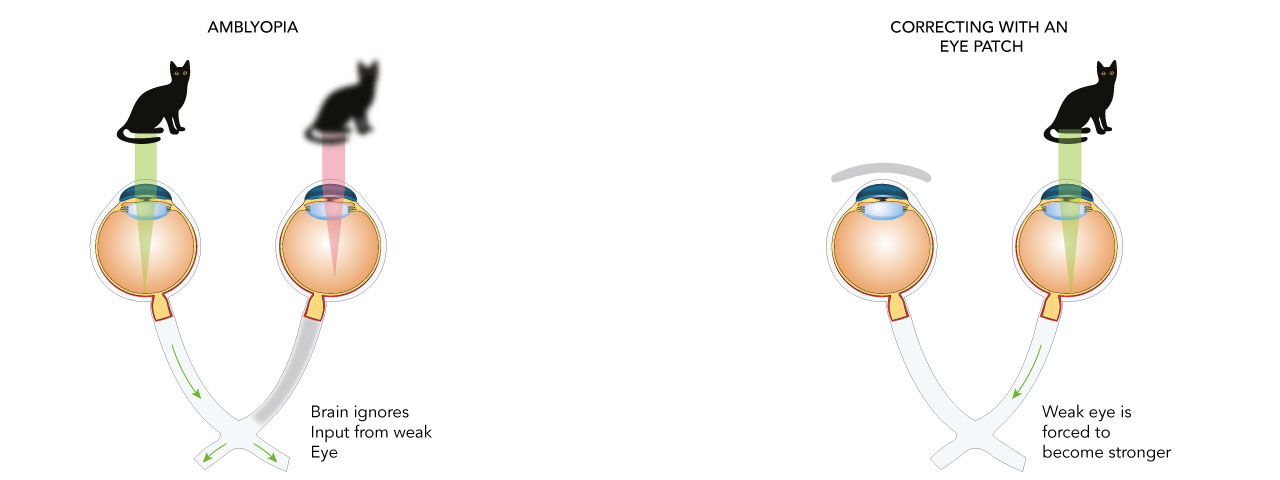
Traditionally, placing a patch (occlusion or penalization) over the better-seeing eye was the only method used to treat amblyopia. In theory, this treatment makes sense because it strengthens the weaker eye without interference from the other eye. Some optometrists may use patching because they claim that the eye and brain will naturally tune in to perfect binocular vision.
Unfortunately, training the brain and eyes to work together isn’t so simple. With patching, this passive process may have only limited results, while the active vision therapy program is meant to guide, teach and retrain the eyes and brain to work together with clear direction. For example, if you’re learning to ride a bicycle, you wouldn’t start with learning to ride a unicycle. You’d have someone guide and teach you on a bicycle, so you can learn the skills to navigate and ride the bike correctly. Your vision is multiple times more complex than the skills involved in bike-riding, and learning the subtle vision skills requires the expertise of an optometrist trained in developmental vision therapy.
Furthermore, another problem with patching is that children may resist wearing it, as it draws attention and may affect their confidence. On the other hand, children who undergo vision therapy are likely to experience a confidence boost as their visual skills are refined.
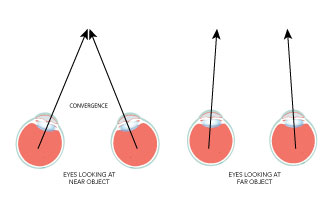
Vision therapy was developed based on significant advances in the neuroscience of vision. Vision therapy also encourages the development of proper binocular vision and eye-teaming. Vision Therapy improves the patient’s visual abilities by enhancing eye coordination, depth perception and reduces suppression, where the brain inhibits blurred or double vision by ignoring the image of the weaker eye.
Vision therapy works through a regimen of individually prescribed and monitored exercises aimed at developing visual skills and processing. The course of vision therapy sessions are typically supplemented by exercises to be done daily at home. The length of the program can range from several weeks to several months, depending on the severity of the diagnosis, patient compliance and eye health.
Speak with Dr. Priya Maharaj from Ancaster Vision Therapy Center and discover how vision therapy can help you or your child with amblyopia.
Our practice serves patients from Hamilton area, Burlington, Brantford, and Cambridge, Ontario and surrounding communities.